Loading available options...
Overview
- Duration:10 days 9 nights
- Travelers:1 - 10 guests
- Tour Type:Family Tour
- Language:English, Italian
Experience a scenic and culturally immersive 11-day journey through Nepal and Bhutan, combining Himalayan landscapes, ancient temples, spiritual monasteries, heritage cities, picturesque valleys, and authentic local experiences. The journey begins in Kathmandu with UNESCO World Heritage Sites, sacred Buddhist stupas, traditional temples, and historic city squares, followed by the serene beauty of Pokhara with Phewa Lake, caves, waterfalls, mountain views, and lakeside experiences. The Bhutan segment takes you through the peaceful Himalayan kingdom of Thimphu, Punakha, and Paro, featuring dramatic mountain passes, Buddhist monasteries, dzongs, traditional markets, spiritual landmarks, and the iconic Tiger’s Nest Monastery.
The package includes carefully selected tourist-class hotels, guided sightseeing, airport transfers, monument entry fees, Bhutan visa fees, Bhutan Sustainable Development Fee (SDF), cultural experiences, and traditional Bhutanese hospitality. Special privileges include bottled water during sightseeing, 24x7 Spanish-speaking concierge service, surprise gifts, hand sanitizer kits onboard, and authentic Bhutanese welcome experiences. The itinerary is ideal for couples, solo travelers, and small groups seeking a balanced combination of culture, spirituality, landscapes, and Himalayan experiences.
Starting Price: €1485 per person (approx.)
Single Room Supplement: €295 per person (approx.)
Supplement for Airfares KTM–PKH–KTM: €145 per person (approx.)
Supplement for Airfares KTM–PARO–KTM: €440 per person (approx.)
Validity: 01 October 2025 till 30 September 2026
Blackout Dates: Rates are not valid from 23 Dec 2025 till 05 Jan 2026.
Highlights
- Explore Kathmandu Durbar Square, Hanuman Dhoka, Taleju Temple, and the spiritual atmosphere of Swayambhunath Stupa in Kathmandu
- Discover the artistic heritage of Patan including Krishna Temple and Hiranya Varna Mahavihar
- Experience the scenic Himalayan landscapes and lakeside beauty of Pokhara
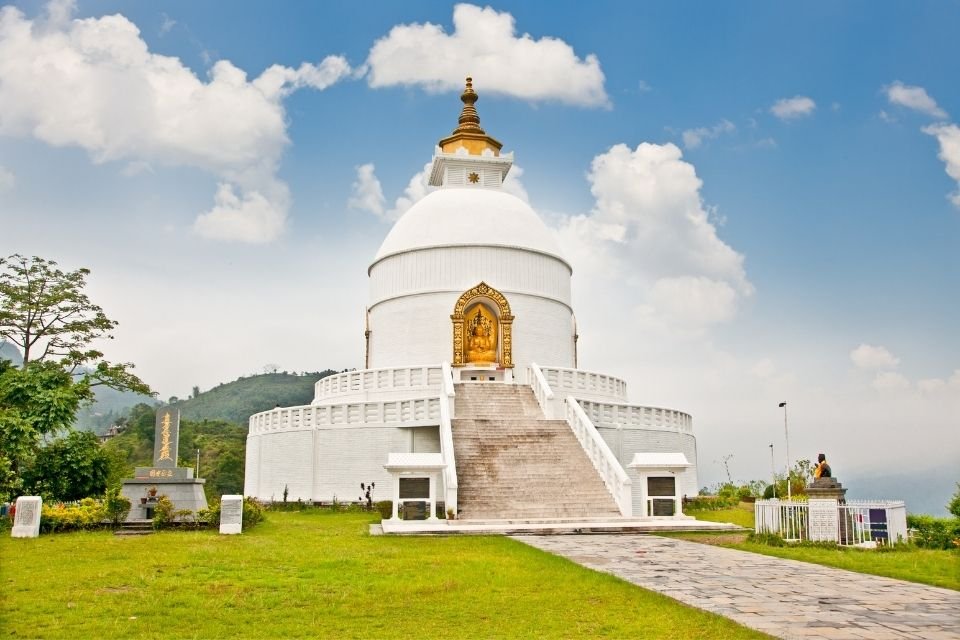
- Visit Davi’s Falls, Gupteshwor Cave, Tibetan Refugee Camp, and the World Peace Pagoda in Pokhara
- Enjoy a peaceful boat ride on Phewa Lake and explore Pokhara’s vibrant lakeside area
- Witness one of the world’s most spectacular Himalayan flights while travelling to Bhutan
- Experience Bhutanese culture and local life in Thimphu through markets, monasteries, and traditional landmarks
- Visit the iconic National Memorial Chorten and Buddha Dordenma in Thimphu
- Explore Bhutanese astrology traditions at Pangri Zampa Monastery
- Discover Bhutan’s traditional arts and rural heritage at the National Institute of Zorig Chusum and Folk Heritage Museum
- Visit the magnificent Trashichhoedzong, the fortress of glorious religion in Bhutan
- Drive through the scenic Dochu-la Pass with panoramic Himalayan mountain views
- Explore Punakha Dzong and the famous fertility temple Chimi Lhakhang in Punakha
- Enjoy scenic drives through Bhutan’s valleys, rivers, and mountain landscapes
- Visit Wangduephodrang Dzong and Simtokha Dzong while travelling towards Paro
- Explore the National Museum at Ta Dzong and the historic Rinpung Dzong in Paro
- Experience the legendary Tiger’s Nest Monastery hike in Paro
- Visit Drukgyel Dzong and the sacred Kyichu Lhakhang temple in Bhutan
- Stay in carefully selected tourist-class hotels across Nepal and Bhutan
- Enjoy authentic Bhutanese hospitality, cultural experiences, and guided sightseeing throughout the journey
- A minimum of 2 passengers is required to guarantee departure
- Hotel check-in time is 14:00 hours and check-out time is 11:00 hours
- Government taxes, entrance fees, guide charges, airfare, and fuel charges are subject to change if revised by authorities
- Children above 12 years are considered adults
- Children below 5 years sharing beds with parents stay without additional accommodation charges
- Third occupant cost will be 50% of the double room cost
Includes/Excludes
- 03 nights accommodation in Kathmandu on bed and breakfast basis
- 02 nights accommodation in Pokhara on bed and breakfast basis
- 05 nights accommodation in Bhutan in double or twin sharing rooms
- Breakfast and dinner at hotels in Bhutan
- Lunch at local restaurants in Bhutan including authentic Bhutanese cuisine
- Airport transfers in air-conditioned vehicles
- All transfers and sightseeing as per itinerary
- Spanish and English-speaking representative assistance
- Spanish-speaking guide services during sightseeing
- Bhutan Spanish-speaking accompanying guide
- Entry fees to monuments and attractions mentioned in the program
- Bhutan Sustainable Development Fee (SDF)
- Bhutan visa fees
- Bottled water during travel and sightseeing
- Traditional Bhutanese welcome experience
- 24x7 Spanish-speaking concierge service
- Hand sanitizer and wet wipes onboard the vehicle
- Surprise gift during the stay
- All applicable taxes and Government Service Tax
- Nepal visa fees
- International and domestic airfare
- Airport taxes
- Travel insurance and medical expenses
- Personal expenses including refreshments, drinks, laundry, Wi-Fi, bar bills, and phone calls
- Rescue costs or expenses caused by landslides, roadblocks, or flight cancellations
- Christmas and New Year supplements
- Meals not mentioned in the inclusions
- Camera charges and optional activities
- Services not specifically mentioned under inclusions
- Tips and gratuities
Itinerary
DAY 1: Arrival in Kathmandu.
Arrival in Kathmandu.
Meet and assist upon arrival, followed by transfer to the hotel.
Check-in at the hotel (standard check-in time: 2:00 PM).
Rest of the day at leisure for self-exploration.
Overnight at the hotel in Kathmandu.
Day 2: Kathmandu.
Breakfast at the hotel.
Morning sightseeing tour of Kathmandu City, Swayambhunath & Patan. The visit includes
Kathmandu Durbar Square- Listed as one of the eight UNESCO World Cultural Heritage Sites, Kathmandu Durbar Square is a group of ancient temples, palaces, courtyards, and streets dating back to the 12th to 18th centuries. The Temple of the Living Goddess, who acknowledges greetings from devotees from the temple residence balcony. The Royal Palace Hanuman Dhoka, the historical seat of royalty. The magnificent Taleju Temple, rising 40 meters high. The capital's name comes from the giant Kasthamandap pagoda, which was said to be built from a single tree. It was recently destroyed in a massive earthquake and will take some time to be rebuilt. It has been a central hub of the city’s social, religious, and political life since the time of the Malla kings.
Swayambhunath: Located approximately 4 km west of Kathmandu, this Buddhist stupa is said to be 2,500 years old. The main structure of the stupa is composed of a solid hemisphere of brick and earth supporting a conical spire crowned with a gilded copper pinnacle. The all-seeing eyes of Buddha are painted on the four sides of the spire’s base.
The hill is a mosaic of small temples, chaityas, and pagodas. It is one of the most sacred Buddhist chaityas in Nepal and the oldest of its kind.
Afternoon - Visit to Patan- Located 5 km from Kathmandu, it is also known as Lalitpur. It is the city of fine arts and is enclosed within four stupas said to have been built in the 3rd century AD by Emperor Ashoka. The city retains much of its ancient charm with its narrow streets, brick houses, and a multitude of well-preserved Hindu temples, Buddhist monasteries (vihars), and other monuments. Here, you will visit The Shikhara-style Krishna Temple, built by King Siddhi Narshing Malla, Hiranya Varna Mahavihar (dating back to the 12th century). The three-story Golden Temple shrine.
Overnight at the hotel in Kathmandu.
Day 3: Kathmandu - Pokhara
Breakfast at the hotel.
Departure by road to Pokhara.
Upon arrival, check-in at the hotel.
Pokhara - It is a city located on Phewa Lake, in central Nepal. It is known as a gateway to the Annapurna Circuit, a popular trekking route in the Himalayas. The Tal Barahi Temple, a two-story pagoda, is situated on an island in the lake. On the eastern shore, the lakeside district features yoga centers and restaurants. To the south of the city, the International Mountain Museum has exhibits on the history of mountaineering and the people of the Himalayas.
Overnight at the hotel in Pokhara.
Day 4: Pokhara
Breakfast at the hotel.
Followed by a visit to Davi's Falls, the Tibetan Refugee Camp, Gupteshwor Cave, and the World Peace Pagoda. In the afternoon, enjoy a boat ride on Phewa Lake and a walking tour around the lakeside area.
Overnight at the hotel in Pokhara.
Day 5: Pokhara to Kathmandu
Breakfast at the hotel.
Later drive back to Kathmandu
Check in at the hotel
Evening at leisure.
Overnight at the hotel in Kathmandu
Day 6: Kathmandu to Paro
Breakfast at the hotel.
Transfer to the airport for the flight to Bhutan.
Arrival in Paro (Bhutan) by flight and transfer to Thimphu (55 km, approx. 1.5 hours by car).
The flight to Paro is one of the most spectacular in the entire Himalayas. Flying along the Himalayan range from Kathmandu or over the foothills of the Himalayas if flying from Kolkata, the journey offers fascinating views and an exciting descent into the Kingdom of Bhutan. The first gift from this country upon landing will be the fresh and clean mountain air.
After immigration procedures and luggage collection, our representative will welcome you with a 'tashi khaddar' (the white scarf offered to guests, an auspicious way of greeting) and proceed to Thimphu, the capital of Bhutan. The road journey passes through the Paro Valley to the confluence of the Paro and Thimphu rivers at Chuzom.
Upon arrival in Thimphu, check in at the hotel.
The capital of Bhutan is the center of government, religion, and commerce. Thimphu is a unique city with an unusual blend of modern development alongside ancient traditions. With a population of around 130,000, it is perhaps the only capital in the world without traffic lights.
In the afternoon, visit the National Memorial Chorten, a large white structure crowned with a golden spire. It is located near the center of Thimphu and is one of its most iconic landmarks. This is the ideal place to interact with locals who gather to circumambulate the chorten, spin the large red prayer wheels, and pray in a small shrine. The paintings and statues inside the monument provide a deep and comprehensive insight into Buddhist philosophy.
Next, enjoy an exploratory walk along Thimphu’s main street and the local market area. Alternatively, explore the Centenary Farmers Market. In this bustling and colorful market space, farmers from different parts of the country gather to sell their agricultural products. With its wide variety of items, including handicrafts, and its picturesque setting, the farmers market is a favorite spot for many locals as well as travelers.
Overnight stay at the hotel in Thimphu (Altitude 2,320m).
Day 7: Thimpu
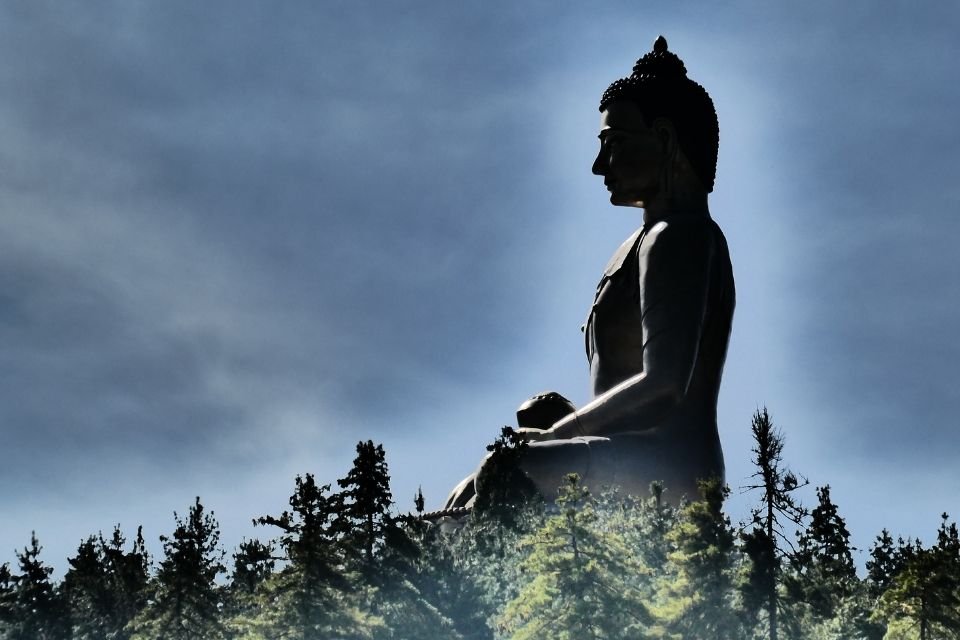
In the morning, after breakfast, take a drive north of the city to Buddha Dordenma, located atop a hill in Kuenselphodrang Nature Park. This statue fulfills an ancient prophecy dating back to the 8th century AD, discovered by Terton Pema Lingpa (a Treasure Revealer), and is said to radiate an aura of peace and happiness for the entire world.
This immense statue of Shakyamuni Buddha is made of bronze and gilded in gold, standing at 51.5 meters tall, making it one of the largest statues in Bhutan. Additionally, 125,000 smaller Buddha statues have been placed inside the Buddha Dordenma statue, each also cast in bronze and gilded in gold.
Drive to Pangri Zampa: This monastery complex was founded in the early 16th century and houses an educational institute of the central monastic body for learning traditional Bhutanese astrology. The founder of Pangri Zampa initially named the monastery "Druk Phodrang," meaning "Dragon Castle," and it was visited by Zhabdrung Ngawang Namgyal (the unifier of Bhutan) in 1616 AD.
Each year, the institute publishes the official Bhutanese calendar and determines the dates of important national events in the country. Locals visit the monastery to learn their annual predictions about luck, wealth, health, career, and more. A nine-day ritual is held here every year for the well-being of all sentient beings and for peace and prosperity in the country. Travelers also visit the monastery to discover predictions about their future, often being
surprised by the accuracy of the astrologers.
On the way back, stop to visit Drubthob Goema / Zilukha Nunnery. Perched on a promontory, with views over the scenic Trashichhoedzong and the golf course, it is the only nunnery in the capital, known as Zilukha Anim Dratsang. It formerly belonged to Drubthob (realized being) Thang Thong Gyalpo, often known as the "King of the Open Field" (in the early 15th century, with his many talents, he became popularly known as the Leonardo da Vinci of the Greater Himalayas). Here you can interact with some of the nuns who have dedicated their lives to spirituality and Buddhism.
After lunch, discover Bhutanese traditional craftsmanship with a visit to the National Institute of Zorig Chusum. Established in 1971, it is the leading institute for preserving and promoting the thirteen traditional arts and crafts of the country. Commonly known as the School of Arts and Crafts or Painting School, the institute offers 4- to 6-year courses in the 13 traditional arts and crafts of Bhutan.
Next, visit the Folk Heritage Museum, dedicated to connecting people with Bhutan's rural past through exhibits, demonstrations, educational programs, and documentation of rural life.
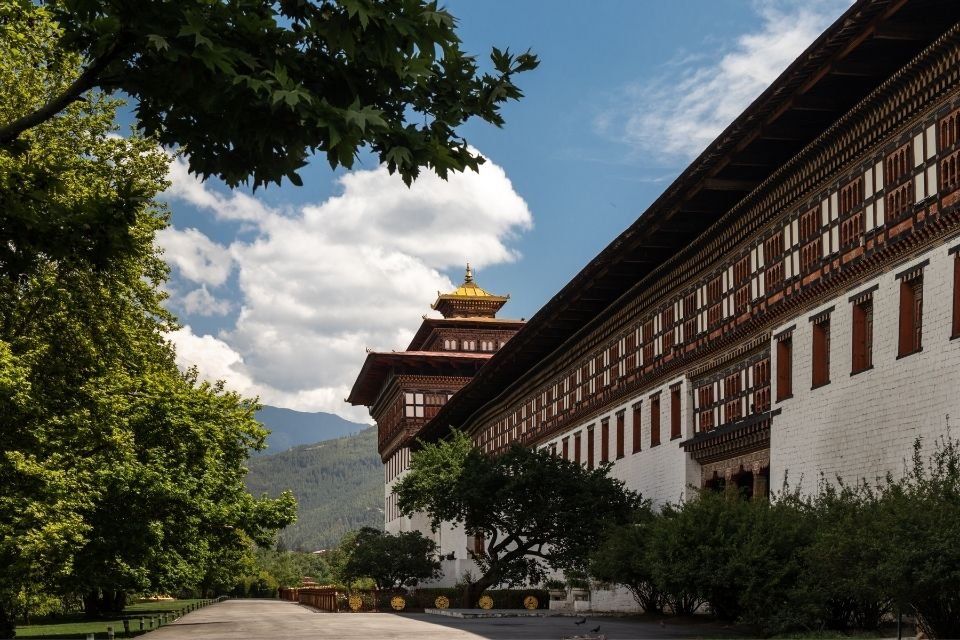
End the day with a visit to Trashichhoedzong, the "fortress of the glorious religion." This is the center of government and religion, the site of the monarch's throne room, and the seat of Je Khenpo or Chief Abbot. Built in 1641 by Bhutan's political and religious unifier, Zhabdrung Ngawang Namgyal, it was rebuilt in the 1960s in the traditional Bhutanese style, without nails or architectural plans.
Free time in the city center of Thimphu.
Overnight stay at the hotel in Thimphu (Altitude 2,320m).
Day 8: Thimpu – Punakha (75 km, approx. 2.5 hours by car)
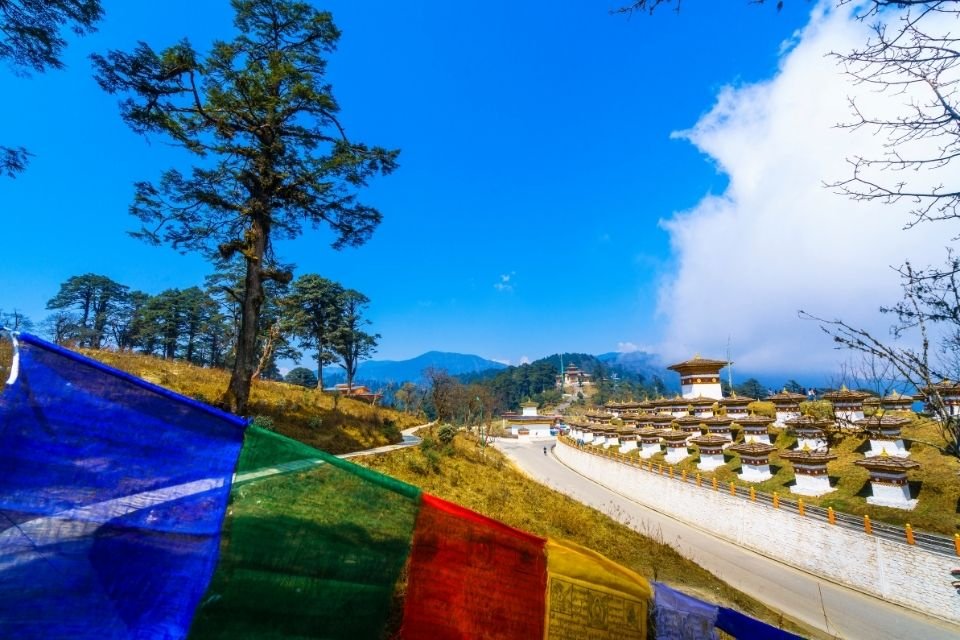
After breakfast, drive to the Dochu-la Pass (3,088 m / 10,130 feet) with a brief stop to enjoy the view and admire the chorten, mani wall, and prayer flags that decorate the highest point of the road. If the sky is clear, the following peaks can be seen from this pass (left to right): Masagang (7,158 m), Tsendagang (6,960 m), Terigang (7,060 m), Jejegangphugang (7,158 m), Kangphugang (7,170 m), Zongphugang (7,060 m), and finally Gangkar Puensum, the highest peak in Bhutan at 7,570 m.
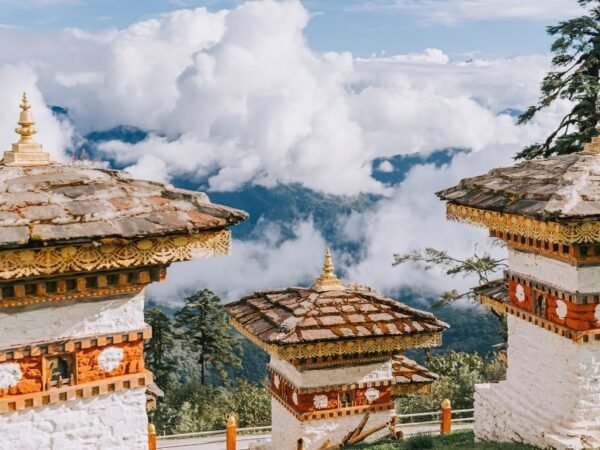
At Dochu-la Pass, there are 108 chortens or stupas known as Druk Wangyal Chortens. They were built by Ashi Dorji Wangmo Wangchuk, the longest-reigning Queen Mother of the country. These chortens are built in three layers: the lower layer has forty-five chortens, the second has thirty-six, and the upper layer has twenty-seven, built around the main chorten.
Continue to Punakha. Punakha served as the capital of Bhutan and the seat of government until 1955 and remains the winter seat of Je Khenpo (the Chief Abbot). This region is blessed with a temperate climate, and due to its naturaldrainage from the Pho Chhu (male) and Mo Chhu (female) rivers, the Punakha valley yields abundant crops and fruits. Situated at an altitude of 1300 m above sea level, Punakha enjoys mild winters and is a popular year-round destination.
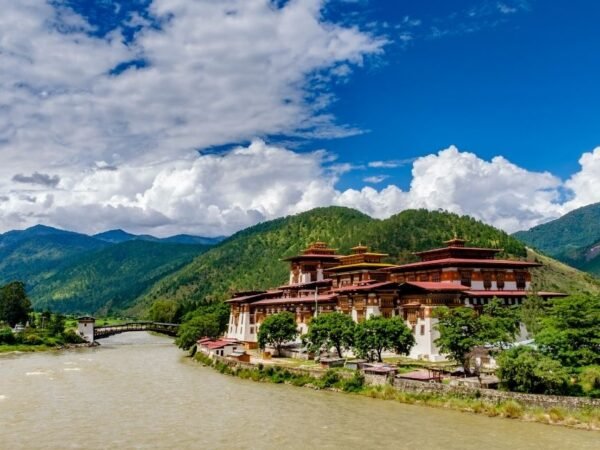
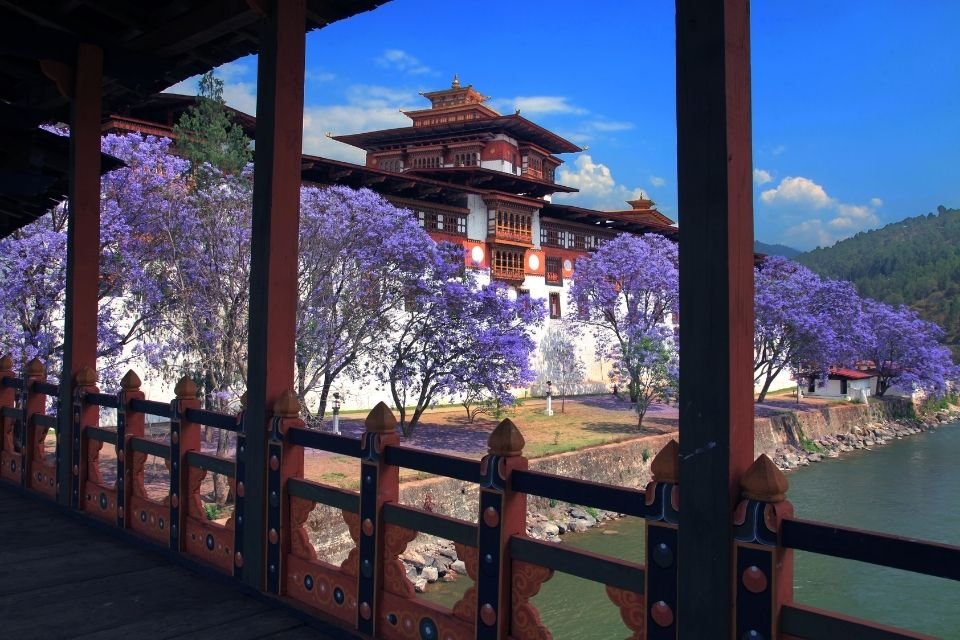
After lunch, visit Punakha Dzong or "Palace of Great Happiness," built at the confluence of the Phochu and Mochu rivers in 1637 by Shabdrung Ngawang Namgyal. This majestic dzong served as the religious and administrative center of Bhutan in the past. It measures about 600 by 240 feet and has a six-story tower with a golden dome. Inside, there are courtyards and religious statues that hint at the depth of history and spiritual tradition embodied here. Your guide will help you understand this intricate culture, which may seem exotic to us but has been long established here.
Continue with an excursion to Chimi Lhakhang.
Chimi Lhakhang, situated on a hill in the center of the valley, is also known as the Temple of Fertility. There is a belief that couples who do not have children and wish for one, if they pray at this temple, are often blessed with a child very soon. The path will take you through rice fields to the small settlement of Pana, which means 'field'. Enjoy a walk through the village near the temple, offering a rare insight into the daily life and lifestyle of the villagers.
In the evening, take a stroll through the town of Punakha and its surroundings.
Overnight stay at the hotel in Punakha (Altitude 1,300m).*
Day 9: Punakhs - Paro (125 km, approx. 4 hours by car)
After breakfast, visit Wangduephodrang Dzong. Founded by Zhabdrung Ngawang Namgyal in 1638, it is located on top of a mountain between the Punak Tsang Chhu and Dang Chhu rivers, offering a fantastic panoramic view of the valley. The strategic location of the dzong allowed the Penlop (governor) of Wangduephodrang to protect routes to Trongsa, Punakha, Dagana, and Thimphu, making him the third most powerful ruler after the governors of Paro and Trongsa. The Dzong was damaged by a fire in 2012 and was restored in 2022 to regain its original grandeur and splendor.
Continue by road to Paro (a scenic drive).
Stop en route to visit Simtokha Dzong: It is situated 5 km south of Thimphu and was built in 1629 by Zhabdrung Ngawang Namgyal. Officially known as Sangak Zabdhon Phodrang (Palace of the Profound Meaning of Secret Mantras), Simtokha is said to be the first dzong built in Bhutan. In fact, it is also the oldest dzong that has survived time while maintaining its complete structure. Its utse (central tower) is three stories high, and the prayer wheels that surround the courtyard are supported by more than 300 finely carved slate carvings.
The beautiful Paro valley holds a rich culture, scenic beauty, and hundreds of myths and legends. It is home to some of the oldest temples and monasteries in the country, the National Museum, and Bhutan's only international airport. Mount Chomolhari (7,314 m) reigns over the northern end of the valley, and its glacial waters plunge through deep gorges to form the Pa Chhu (Paro River). Paro is also one of the most fertile valleys in the kingdom, producing most of
its famous red rice.
After lunch, proceed to visit Ta Dzong, originally built as a Watchtower, which now houses the National Museum. The extensive collection includes ancient thangkha paintings, textiles, weapons and armor, household items, and a rich variety of historical artifacts.
Continue with a short walk along the trail to visit Rinpung Dzong (Paro Dzong), which means "fortress of the heap of jewels." Along the wooden galleries that line the inner courtyard are fine murals that illustrate Buddhist traditions, such as the four friends, the old man of longevity, the wheel of life, scenes from the life of Milarepa, Mount Sumeru, and the cosmic Mandala.
Overnight stay at the hotel in Paro (Altitude 2,280m).
Day 10: Paro
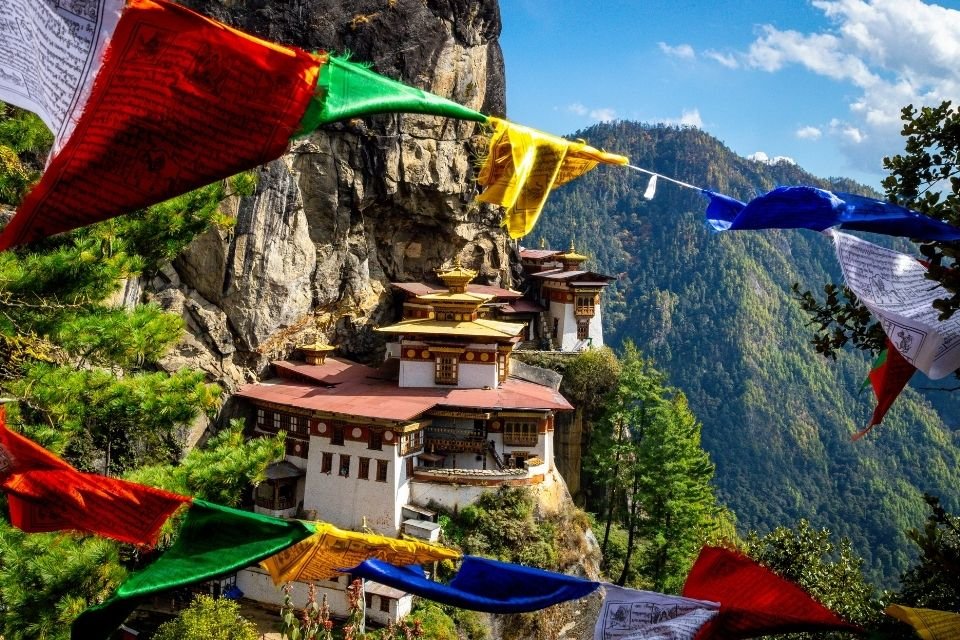
After breakfast, enjoy an excursion to the Taktshang Monastery, also known as the Tiger's Nest (approx. 5 hours round-trip hike). It is one of Bhutan's most famous monasteries, perched on a cliffside 900 meters above the Paro valley floor. Legend has it that Guru Rinpoche arrived here on the back of a tigress and meditated in this monastery, hence the name 'Tiger's Nest.' This place has been recognized as the most sacred and was visited by Zhabdrung Ngawang Namgyal in 1646.
In the afternoon, drive to the recently restored Drukgyel Dzong. Built by Zhabdrung Ngawang Namgyal in 1646 to commemorate an early military victory over Tibetan invaders, this Dzong stood the test of time in great splendor and appeared in National Geographic magazine in 1914. The glory of Drukgyel Dzong persisted even when it was destroyed by a fire in 1951. On a clear day, you can enjoy the lush view of Mount Chomolhari.
On the way back to town, stop to visit Kyichu Lhakhang, one of the oldest and most sacred temples in Bhutan, dating back to the 7th century.
Lhakhang: It is one of the oldest and most sacred sanctuaries in the Kingdom, dating back to the 7th century (the other being Jambey Lhakhang in Bumthang). The Lhakhang complex consists of two temples. The first temple was built by the Tibetan King Songtsen Gampo in the 7th century, and in 1968, Her Majesty Ashi Kesang, the Queen Mother of Bhutan, constructed the second temple following the original design.
Overnight at the hotel in Paro (Altitude 2,280m).
Day 11: Departure From Paro
After breakfast, transfer to the airport to catch the flight to your next destination.
Cancellation policy
+45 days before departure: No fee
44 to 30 days before departure: 25%
Less than 30 days before departure: 100%
Frequently asked questions
What is the duration of this package?
Which destinations are covered in this tour?
Are Bhutan visa fees included in the package?
Are airport transfers included?
Is the Tiger’s Nest Monastery hike included?
Are meals included in the package?
What type of hotels are included?
Is this package suitable for solo travelers and couples?
All rates and hotel accommodations are subject to availability at the time of confirmation. Have a question before booking? Message us to learn more.