Loading available options...
Overview
- Duration:8 days 7 nights
- Travelers:1 - 10 guests
- Tour Type:Adventure Tour, Cultural Tour, Family Tour, Group tour, Spiritual Tour
- Language:Dzongkha, English
Experience Bhutan through a deeply cultural and scenic 8-day journey covering Paro, Thimphu, Gangtey, Punakha, and Paro. Known as the Last Shangri-La, Bhutan offers a rare combination of pristine Himalayan landscapes, dense forests, ancient Dzongs, temples, monasteries, stupas, prayer flags, Buddhist heritage, and warm local hospitality. This itinerary includes the capital city of Thimphu, the peaceful Phobjikha Valley in Gangtey, the majestic Punakha Dzong, rural Bhutanese village experiences, Paro Valley, and the iconic Taktshang Monastery, also known as Tiger’s Nest. The travel style is cultural, spiritual, scenic, and nature-focused, suitable for travellers looking for an immersive Bhutan experience with comfort, guided sightseeing, and traditional privileges.
Hotels foreseen include Hotel Phuntsho Pelri or Bhutan Peaceful Residency & Spa in Thimphu, Phobjikha Resort or similar in Gangtey, Zhingkham Resort or Dragon’s Nest Resort in Punakha, and Paro Eco Lodge or Hotel Olathang in Paro. The package includes 7 nights of accommodation in double/twin rooms, breakfast and dinner at the hotels where guests stay, lunch at local restaurants including authentic Bhutanese food, an English-speaking tour guide, air-conditioned transportation, Governmental Sustainable Development Fee, Bhutan visa fees, and entrance fees as per visits mentioned in the program.
Special privileges include 24/7 English-speaking concierge service, traditional Bhutanese welcome upon arrival, bottled water during travel and sightseeing in the vehicle, hand sanitizer and wet wipes on board the vehicle, and a surprise gift once during the stay. Transport type with air conditioning is Hyundai Tucson / Santa Fe / Kia Sorento / Sportage / Seltos or similar for 2 people, and Toyota Hiace Bus / Hyundai H1 for 3 to 6 people. A minimum of 2 pax is required to guarantee departure, and all departures operate with a maximum of 20 pax. The reservation must be confirmed 30 days before departure. Vegan food requests are accepted. Government taxes, entrance fees, guide fees, airfare, fuel fees, and similar charges are subject to change if revised by the government and authorities. Hotel accommodation is subject to confirmation, and if any mentioned hotel is unavailable, alternative accommodation in a similar hotel will be booked.
For third person and child conditions, the cost for the third occupant will be 50% of the total cost of the double room according to the quoted price. Children under 5 years sharing a bed with parents will not incur additional charges, and meals must be paid directly at the hotels. Children between 5 and 12 years will not incur additional room charges if sharing a bed with parents, but if they opt for half-board or full-board, they must pay 50% of the meal cost. Children over 12 years are considered adults, and the child’s passport must be presented when processing the reservation.
Highlights
- Arrive in Paro with one of the most spectacular Himalayan flight experiences and transfer to Thimphu.
- Receive a traditional Bhutanese welcome with a tashi khaddar upon arrival.
- Visit National Memorial Chorten and explore Thimphu’s main street or Centenary Farmers’ Market.
- Discover Buddha Dordenma, Pangri Zampa, Drubthob Goema / Zilukha Nunnery, National Institute of Zorig Chusum, Folk Heritage Museum, and Trashichhoedzong in Thimphu.
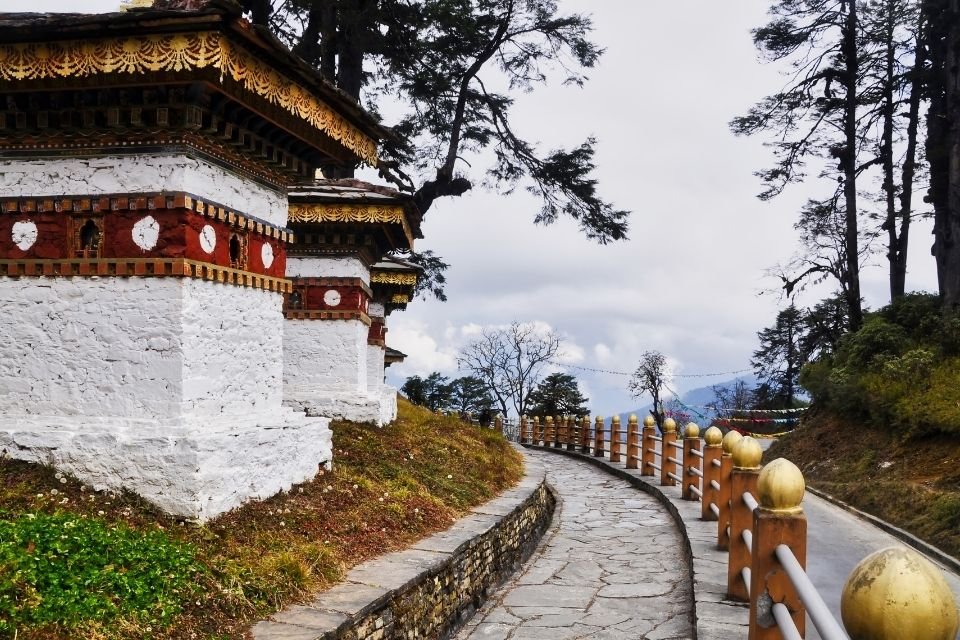
- Travel through Dochu-la Pass with views of Himalayan peaks and the 108 Druk Wangyal Chortens.
- Explore Gangtey Valley and Phobjikha Valley, the winter home of black-necked cranes.
- Visit Gangtey Goemba and witness a prayer ceremony at the monastery.
- Enjoy a natural trail walk in Gangtey through meadows, forests, village areas, and open valley landscapes.
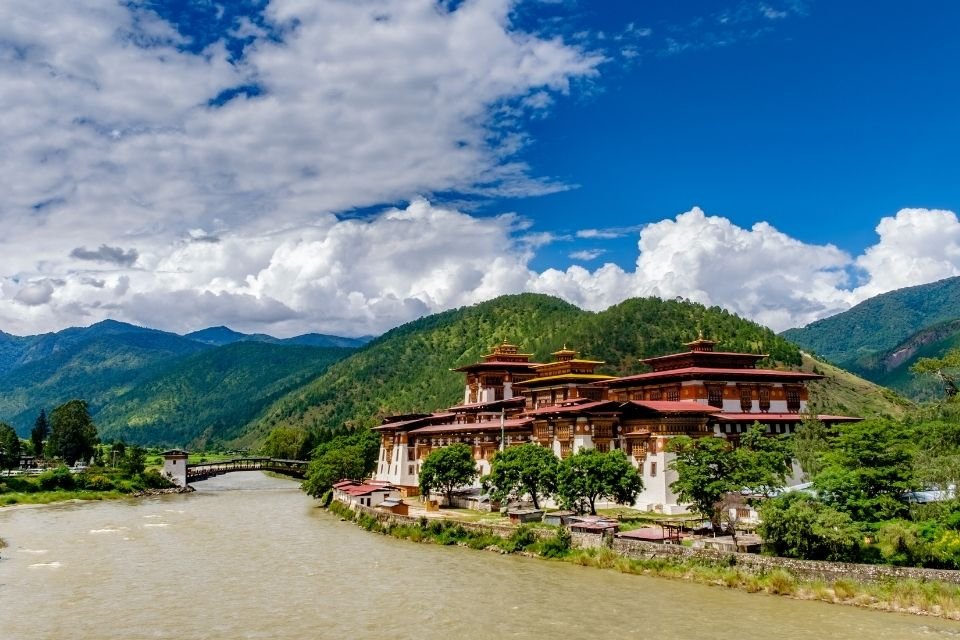
- Visit Wangduephodrang Dzong, Punakha Dzong, and Chimi Lhakhang in Punakha.
- Hike to Khamsum Yuelley Namgel Chorten with views across Mo Chhu and the mountain peaks beyond.
- Explore Talo village, Nobgang, Nalanda Buddhist Institute, and if time permits, Sangchhen Dorji Lhuendrup Lhakhang nunnery.
- Travel to Paro with stops at Simtokha Dzong and Chuzom.
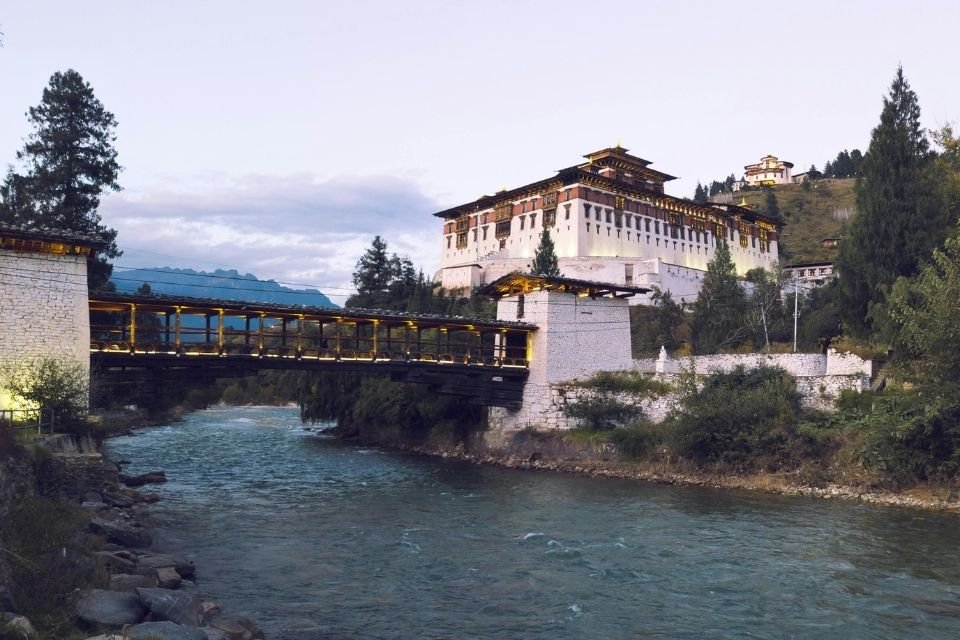
- Visit Ta Dzong, National Museum, and Rinpung Dzong in Paro.
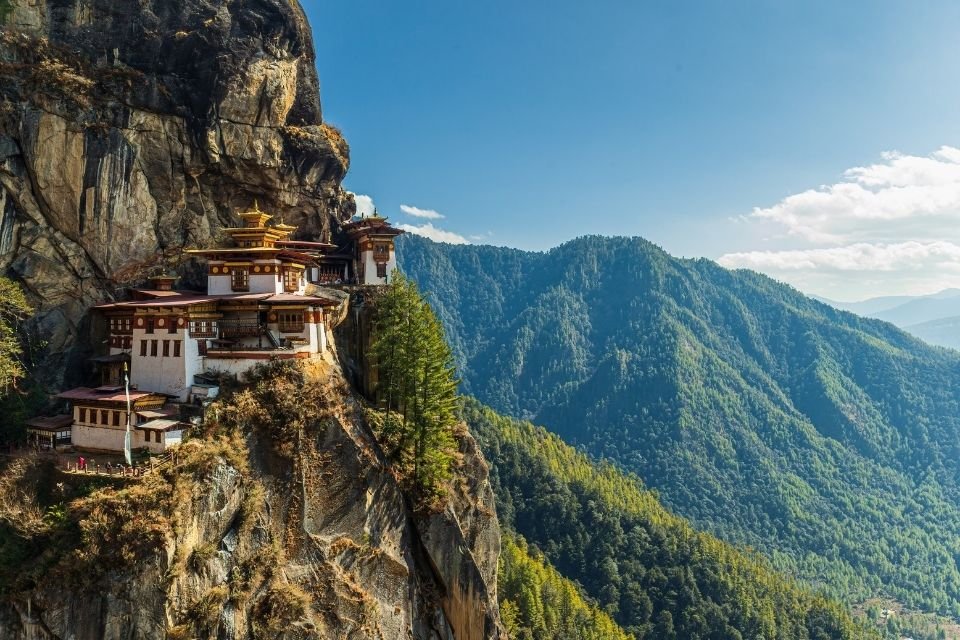
- Hike to Taktshang Monastery, also known as Tiger’s Nest, one of Bhutan’s most sacred sites.
- Visit Drukgyel Dzong and Kyichu Lhakhang before departure from Paro.
Includes/Excludes
- 7 nights of accommodation in double/twin rooms as indicated.
- Breakfast and dinner at the hotels where you stay & lunch at local restaurants, including authentic Bhutanese food.
- English speaking tour guide.
- Air-conditioned transportation from and to the hotel, between cities, and during excursions.
- Governmental Sustainable Development Fee (SDF).
- Bhutan visa fees.
- Entrance fees as per the visits mentioned in the program.
- Airfare and airport taxes.
- Insurance of any kind and medical expenses.
- Personal expenses including tips, laundry, phone calls, camera fees, drinks, and meals not explicitly mentioned in the program.
- Any service not mentioned in the program.
Itinerary
Day 01: Arrival In Paro - By Flight And Transfer To Thimphu
The flight to Paro is one of the most spectacular in the entire Himalayas. Flying along the Himalayan range from Kathmandu or over the foothills of the Himalayas if flying from Kolkata, the journey offers stunning views and an exciting descent into the Kingdom of Bhutan. The first gift of this country upon landing will be the fresh, clean mountain air.
After immigration formalities and luggage collection, our representative will welcome you with a 'tashi khaddar' (a white scarf offered to guests as an auspicious form of greeting) and proceed to Thimphu, the capital of Bhutan. The drive takes you through the Paro valley to the confluence of the Paro and Thimphu rivers at Chuzom.
Upon arrival in Thimphu, check in at the hotel. The capital of Bhutan is the center of government, religion, and commerce. Thimphu is a unique city with an unusual blend of modern development alongside ancient traditions. With a population of around 130,000, it is perhaps the only capital in the world without traffic lights.
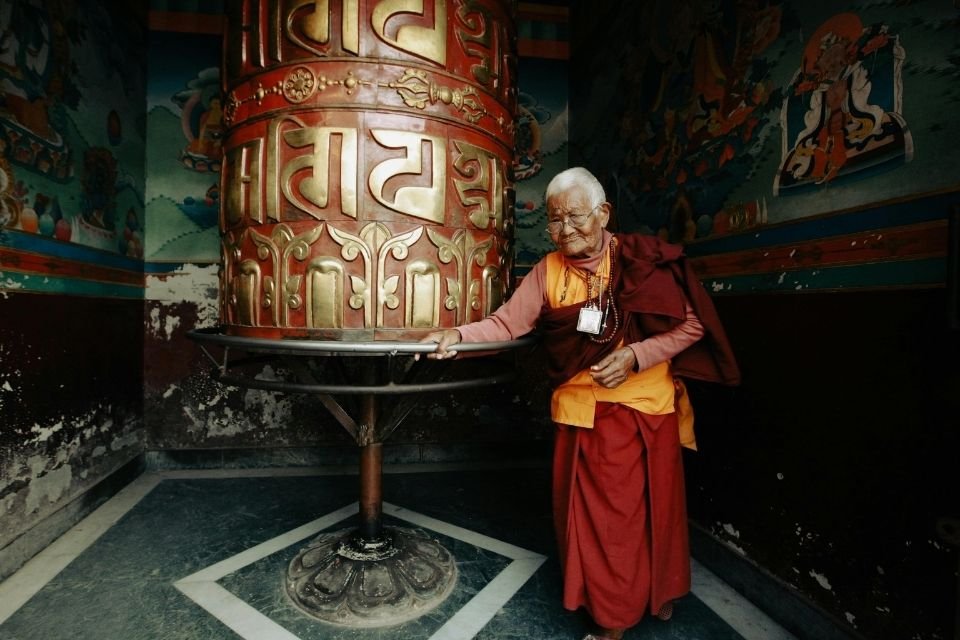
In the afternoon, visit the National Memorial Chorten, a large white structure topped with a golden spire. It is located near the center of Thimphu and is one of the city's most iconic landmarks. This is the ideal place to interact with locals who gather to circumambulate the chorten, spin the large red prayer wheels, and pray in a small shrine. The paintings and statues inside the monument provide a profound and comprehensive insight into Buddhist philosophy.
Next, enjoy a leisurely stroll along Thimphu's main street and the local market area. Alternatively, explore the Centenary Farmers’ Market. In this bustling and colorful space, farmers from various parts of the country gather to sell their agricultural products. With its wide variety of items, including handicrafts and its picturesque setting, the farmers' market is a favorite spot for many locals and travelers alike.
Overnight at the hotel in Thimphu (Altitude: 2,320m).
Day 02: Thimphu
Breakfast. Tour of Old Delhi, visiting Jama Masjid, one of the largest mosques in India on the tour of Old Delhi and then passing in front of the Red Fort (photo stop). We will continue with a visit to the Raj Ghat, which literally means “royal courtyard” and is the monument in honor of the leader Mahatma Gandhi. It is a simple black marble slab located in the exact place where the Father of the Nation was cremated on January 31, 1948, just one day after his assassination. In the afternoon we continue our trip visiting the New Delhi area, we begin with a visit to Qutub Minar – The Victory Tower is a 5-story, 73-meter-high minaret, built by Qutab-ud-din Aibak after the defeat of the last Hindu kingdom of the city. Later we will pass by Rashtrapati Bhavan, current residence of the President of India. Its main building has 340 rooms. We will also pass by the most important government buildings and the national parliament, as well as the India Gate. All these buildings are great examples of the political power of the British Empire in India. We will also pass by the Salt March monument and the famous Connaught Palace area during our tour of New Delhi. Overnight at hotel in Delhi .
Day 03: Thimphu – Gangtey
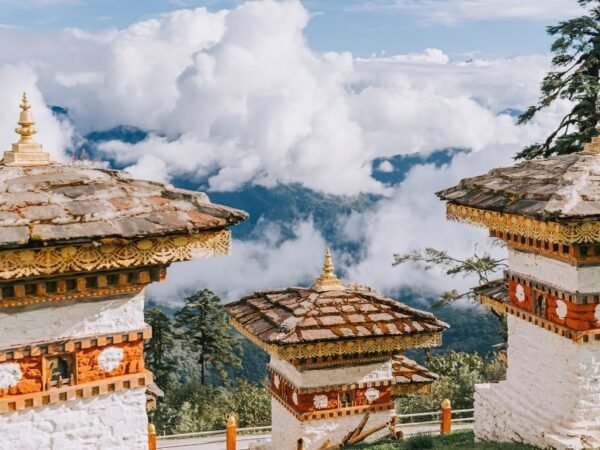
After breakfast, depart by road for Dochu-la Pass (3,088 m / 10,130 ft), where you will make a brief stop to enjoy the views and admire the chorten, mani wall, and prayer flags that decorate the highest point along the road. If the sky is clear, the following peaks can be seen from this pass (from left to right): Masagang (7,158 m), Tsendagang (6,960 m), Terigang (7,060 m), Jejegangphugang (7,158 m), Kangphugang (7,170 m), Zongphugang (7,060 m), and finally Gangkar Puensum, the highest peak in Bhutan at 7,570 m.
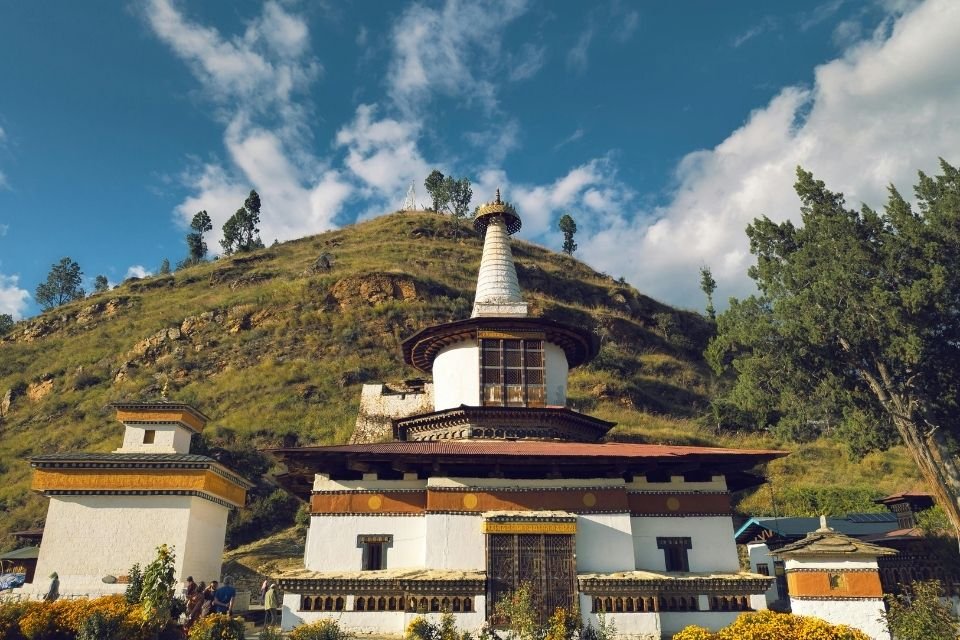
At Dochula Pass, there are 108 chortens, or stupas, known as Druk Wangyal Chortens. They were built by Ashi Dorji Wangmo Wangchuk, the longest-serving Queen Mother of the country. These chortens are arranged in three layers: the first layer contains 45 chortens, the second has 36, and the uppermost layer has 27, all surrounding the main chorten.
Afterwards, continue your journey to Gangtey. The Gangtey Valley is one of the most beautiful and pristine places in Bhutan. A few kilometers beyond the Gangtey Monastery lies the village of Phobjikha, which serves as the winter home for the black-necked cranes that migrate from the arid plains of the north to spend the winter in a milder climate.
Upon arrival in Gangtey, check into your hotel. Later, enjoy a stroll through the idyllic Pobjikha Valley.
In the afternoon, visit Gangtey Goemba, perched on a small hill rising from the valley floor. It is the only Nyingmapa monastery on the western side of the Gangtey Valley and is the largest Nyingmapa monastery in Bhutan. The monastery is surrounded by a large village inhabited by families of the 140 Gomchens who care for it. You will have the opportunity to witness a prayer ceremony at the monastery.
Overnight at a hotel in Gangtey (Altitude: 3,000 m).
Day 04: Gangtey – Punakha
After breakfast, embark on a walking tour of the natural trail in Gangtey. This walk will give you a pleasant feel for the Phobjikha Valley. Starting from a small hill overlooking Gangtey Goemba, descend through flower-filled meadows to the village of Semchubara, and continue through beautiful forests and into the open valley. The trail ends at the local community school after passing a chorten and Khewa Lhakhang (approx. 5.5 km, 2 hours on foot).
After the hike, drive towards Punakha along a forested mountain road.
Before entering the city of Punakha, stop to visit Wangduephodrang Dzong. Founded by Zhabdrung Ngawang Namgyal in 1638, it is located on a mountain ridge between the Punak Tsang Chhu and Dang Chhu rivers, offering a fantastic panoramic view of the valley. Its strategic location allowed the Penlop (governor) of Wangduephodrang to protect the routes to Trongsa, Punakha, Dagana, and Thimphu, making it the third most powerful ruler after the governors of Paro and Trongsa. The dzong was damaged by a fire in 2012 and was restored in 2022 to regain its original grandeur.
Punakha enjoys a temperate climate, and its natural drainage from the Pho Chhu (male) and Mo Chhu (female) rivers produces abundant crops and fruits. Situated at an altitude of 1,300 m above sea level, Punakha is a popular destination year-round.
Upon arrival in Punakha, check into your hotel.
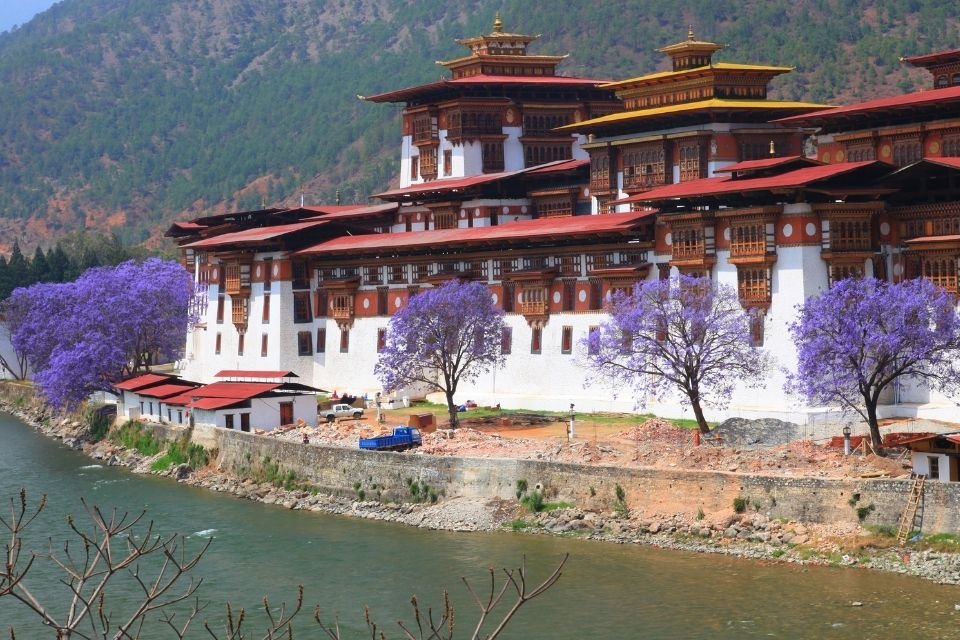
Next, visit Punakha Dzong or the "Palace of Great Happiness," built at the confluence of the Pho Chhu and Mo Chhu rivers in 1637 by Zhabdrung Ngawang Namgyal. This majestic dzong served as the religious and administrative center of Bhutan in the past. It measures approximately 600 by 240 feet and features a six-story tower with a golden dome. Inside, you will find courtyards and religious statues that hint at the depth of history and spiritual tradition embodied here. Your guide will help you understand this intricate culture, which is both exotic and deeply established.
You will then continue with an excursion to Chimi Lhakhang. This temple, located on a hill in the center of the valley, is also known as the Temple of Fertility. It is believed that couples who are unable to have children and pray at this temple are often blessed with a child soon thereafter. The path will take you through rice fields to the small settlement of Pana, meaning "field." Enjoy a walk through the village near the temple, which will provide you with a rare glimpse into the everyday lives of the locals.
Overnight at a hotel in Punakha (Altitude: 1,300 m).
Day 05: Punakha
After breakfast, hike to the majestic Khamsum Yuelley Namgel Chorten, which was built to eliminate negative forces and promote peace, stability, and harmony in the changing world. This chorten dominates the upper part of the Punakha Valley, offering imposing views across the Mo Chhu and towards the mountain peaks of Gasa and beyond (approx. 2 hours round trip).
After lunch, take an excursion to the village of Talo, which is situated along the hillsides and is known for its cleanliness. Talo is the home of the mental incarnations of Zhabdrung. The Talo Sangnacholing Dzong is built on a plateau and offers majestic views of the surrounding villages. The beautiful farms in the village have their own flower gardens, and maize and sweet peas are cultivated on the hillside. Spend time in the villages of Nobgang and Talo visiting farms and meeting families, experiencing rural Bhutanese life.
Also, visit the Nalanda Buddhist Institute, known locally as 'Dalayna' and referred to by the monks as Nalanda Buddhist College. This monastic school is located near the village of Talo, overlooking the Punatsangchu River.
If time permits, visit the Sangchhen Dorji Lhuendrup Lhakhang nunnery. Perched on a ridge amidst pine trees, this temple shines over the valleys of Punakha and Wangdue. It houses a 14-foot bronze statue of Avalokiteshvara and statues of Guru Padmasambhava, Gautama Buddha, Zhabdrung Ngawang Namgyal, Tsela Namsum, the 21 Taras, and Tsepamay (the Buddha of Longevity). The temple complex also hosts a permanent center for higher education and meditation for nuns, providing training in life skills such as sewing, embroidery, statue-making, and thangka painting, in addition to religious activities and training.
Overnight at a hotel in Punakha (Altitude: 1,300 m).
Day 06: Punakha – Paro
After breakfast, depart by road to Paro. The route is steep, winding through forests of pine and cedar adorned with hanging lichens near Dochula Pass.
Stop along the way to visit Simtokha Dzong, located 5 km south of Thimphu. Built in 1629 by Zhabdrung Ngawang Namgyal, it is officially known as Sangak Zabdhon Phodrang (Palace of the Profound Meaning of Secret Mantras) and is said to be the first dzong constructed in Bhutan. In fact, it is also the oldest dzong that has survived the test of time, maintaining its complete structure. Its utse (central tower) stands three stories tall, and the prayer wheels surrounding the courtyard are backed by more than 300 finely carved slate carvings.
Continue your drive to Chuzom, the confluence of the Wang Chhu and Paro Chhu rivers. Here, you can glimpse three nearby shrines built to ward off evil spirits, each showcasing a different architectural style: Nepalese, Tibetan, and Bhutanese.
Upon arrival, check into your hotel.
Later, we will embark on an excursion to explore the surroundings of the Paro Valley. The beautiful Paro Valley is rich in culture, scenic beauty, and hundreds of myths and legends. It is home to some of the country’s oldest temples and monasteries, the National Museum, and Bhutan’s only international airport. Mount Chomolhari (7,314 m) dominates the northern edge of the valley, with its glacial waters flowing through deep gorges to form the Paro Chhu River. Paro is also one of the most fertile valleys in the kingdom, producing much of the famous red rice from its fields.
Next, we will visit Ta Dzong, originally built as a watchtower, which now houses the National Museum. Its extensive collection includes ancient thangka paintings, textiles, weapons and armor, household items, and a rich variety of historical artifacts.
We will continue with a short walk along the trail to visit Rinpung Dzong (Paro Dzong), which means "fortress of the heap of jewels." Along the wooden galleries that line the inner courtyard, you will find exquisite murals depicting Buddhist traditions, such as the Four Friends, the Elder of Long Life, the Wheel of Life, scenes from the life of Milarepa, Mount Sumeru, and the cosmic Mandala.
Overnight at a hotel in Paro (Altitude: 2,280 m).
Day 07: Paro
After breakfast, enjoy an excursion to Taktshang Monastery, also known as the Tiger's Nest (approx. 5 hours round trip hike). It is one of the most famous monasteries in Bhutan, perched on a cliffside 900 meters above the Paro Valley. According to legend, Guru Rinpoche arrived here on the back of a tigress and meditated in this monastery, which is why it is called the 'Tiger's Nest.' This site has been recognized as the most sacred place and was visited by Zhabdrung Ngawang Namgyal in 1646.
In the afternoon, drive to the recently restored Drukgyel Dzong. Built by Zhabdrung Ngawang Namgyal in 1646 to commemorate an early military victory over Tibetan invaders, this dzong has withstood the test of time and appeared in National Geographic magazine in 1914. The glory of Drukgyel Dzong persisted even after it was destroyed by a fire in 1951. On a clear day, you can enjoy a stunning view of Mount Chomolhari.
On the way back to the city, stop to visit Kyichu Lhakhang, one of the oldest and most sacred shrines in the kingdom, dating back to the 7th century (the other is Jambey Lhakhang in Bumthang). The lhakhang complex consists of two temples. The first temple was built by the Tibetan king Songtsen Gampo in the 7th century, and in 1968, Her Majesty Ashi Kesang, the Queen Mother of Bhutan, constructed the second temple in the original pattern.
Overnight at a hotel in Paro (Altitude: 2,280 m).
Day 08: Depart Paro
After breakfast, transfer to the airport for your flight to your next destination.
Cancellation policy
+45 days before departure: No fee
44 to 30 days before departure: 25%
Less than 30 days before departure: 100%
Frequently asked questions
What Is The Total Duration Of This Package?
Which Meals Are Included In The Package?
Is The Bhutan Visa Included?
Is The Sustainable Development Fee Included?
Are Transfers Included In This Package?
Is The Tiger’s Nest Hike Included?
Are Guides Included?
Is Airfare Included In The Package?
Is This Package Suitable For Cultural And Spiritual Travellers?
All rates and hotel accommodations are subject to availability at the time of confirmation. Have a question before booking? Message us to learn more.